LASIK & Refractive Vision Correction Consultation
Detailed candidacy evaluations and customized laser vision correction options designed to safely reduce or eliminate dependence on eyeglasses and contact lenses.
Understanding the Condition
Refractive errors—including myopia (nearsightedness), hyperopia (farsightedness), and astigmatism—occur when the eye’s physical shape prevents incoming light from focusing precisely onto the retina. Refractive surgery reshapes the microscopic curvature of the cornea using an excimer laser, allowing light rays to focus directly onto the retinal photoreceptors.
Common Symptoms & Clinical Signs
Diagnostic Evaluation & Pre-Treatment Workup
Prior to recommending any surgical or medical protocol, patients undergo objective diagnostic testing in our specialized suites:
- Pentacam corneal tomography to analyze anterior and posterior corneal elevation and detect keratoconus risk
- Ultrasonic pachymetry to confirm adequate central and peripheral corneal stromal thickness
- Dilated cycloplegic refraction to ascertain true, unaccommodated refractive power
- Tear film evaluation and dry eye analysis
- Peripheral retinal indirect ophthalmoscopy to detect and treat any asymptomatic retinal holes or thinnings prior to surgery
Available Treatment Options & Procedures
Femto-LASIK (Blade-Free)
A precision femtosecond laser creates an ultra-thin corneal flap, followed by excimer laser stromal remodeling and smooth flap repositioning.
Photorefractive Keratectomy (PRK) / Advanced Surface Ablation
Laser remodeling performed directly on the upper stroma without creating a corneal flap, followed by a therapeutic bandage contact lens.
Custom Wavefront-Guided Ablation
Personalized treatment addressing microscopic higher-order optical aberrations beyond simple sphere and cylinder numbers.
Patient Candidacy & Contraindications
- ✓ Individuals aged 18 years or older with stable vision prescription for at least 12 consecutive months
- ✓ Corneal thickness safely exceeding minimum international residual bed thresholds
- ✓ Healthy corneas with no signs of ectasia, keratoconus, or severe untreated dry eye
- ✕ Pregnant or nursing mothers due to transient hormonal fluctuations affecting corneal shape
- ✕ Patients with keratoconus, irregular corneal astigmatism, or systemic autoimmune disorders
- ✕ Individuals with active ocular inflammation or uncontrolled glaucoma
Recovery Timeline & Post-Operative Care
- Do not rub, touch, or press the operated eye for 2 weeks
- Use preservative-free lubricating drops generously as directed
- Wear protective sunglasses outdoors to shield from wind, dust, and intense sunlight
- Avoid eye makeup, swimming, and dusty environments for 3 weeks
Clinical Limitations & Safety Considerations
In accordance with ethical medical practice, no medical procedure carries a guarantee of 100% cure or zero risk. Our ophthalmologists conduct thorough risk-benefit evaluations before every treatment.
- • Refractive surgery does not prevent age-related presbyopia (need for reading glasses after age 40).
- • Temporary dry eye sensations are common during the initial 2 to 3 months and respond well to ocular lubricants.
- • Slight night halos around lights may occur initially and diminish as corneal healing stabilizes.
Questions About LASIK & Refractive Care
Are results permanent?
What happens if my cornea is too thin for LASIK?
Can I undergo LASIK on both eyes at the same time?
Consultation Guide, Clinical Evaluation & Quotations
Every eye is unique. Treatment decisions—ranging from therapeutic medical regimens to advanced day-care microsurgeries—depend strictly upon diagnostic measurements, corneal topography, retinal health, and lifestyle requirements rather than standard pre-set packages.
What to Bring to Your Visit
- • Current spectacles and existing prescription cards
- • Relevant previous eye records or surgical discharge summaries
- • Complete list of systemic medications (diabetic/BP records)
- • Health insurance TPA card or policy details for cashless review
Factors Influencing the Treatment Pathway
- • Diagnostic findings from computerized biometry and scans
- • Lens or technology choice (e.g. monofocal, toric, or multifocal)
- • Co-existing eye conditions (e.g. glaucoma, macular changes, dry eye)
- • Follow-up schedule and customized post-operative medication
Because care is tailored to your clinical assessment, fixed promotional packages are not published online. Contact the hospital for an individual quotation after assessment. Our hospital counselors provide an itemized breakdown of clinical fees, diagnostic workups, and insurance pre-authorization support following your in-person examination.
Where Care is Delivered Across Our Branches
To ensure convenience and uninterrupted continuity of ophthalmic care, Vijaya Eye Hospital delivers clinical services across two dedicated physical centers in Bangalore:
Vijayanagar Main Hospital
Surgical CenterFull outpatient consultations, comprehensive diagnostic workups, and all day-care surgical procedures in sterile modular operation theatres. Includes Neha Opticals dispensary.
Nagadevanahalli Branch
West Bangalore OPDSpecialist outpatient consultations, computerized diagnostic testing, and pre/post-operative reviews. All surgical procedures are scheduled at our Vijayanagar surgical facility.
When to Seek Immediate Ophthalmic Attention
Certain ocular symptoms require prompt emergency evaluation to protect eyesight. Contact our hospital desk or visit immediately if you experience:
- • Sudden, painless loss or dimming of vision
- • Sudden shower of dark floaters or flashes
- • Chemical or toxic substance splash into eye
- • Blunt or penetrating ocular physical trauma
Related Specialties & Patient Services
Explore interconnected clinical departments and patient support services at Vijaya Eye Hospital:
Request Your Consultation
Meet with our attending ophthalmologists for an objective clinical assessment at our Vijayanagar or Nagadevanahalli hospital.
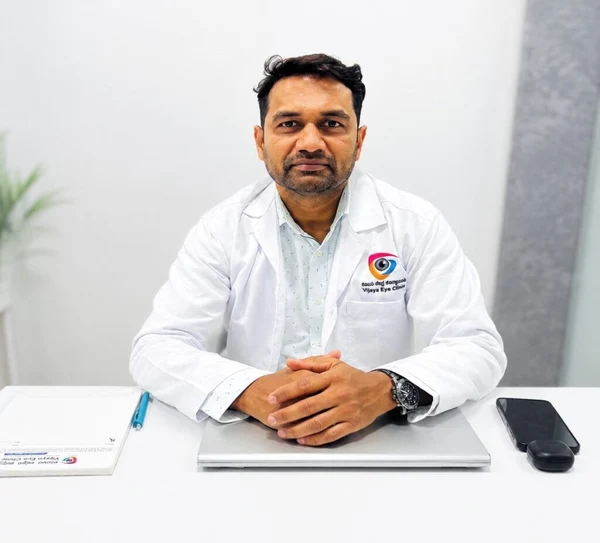
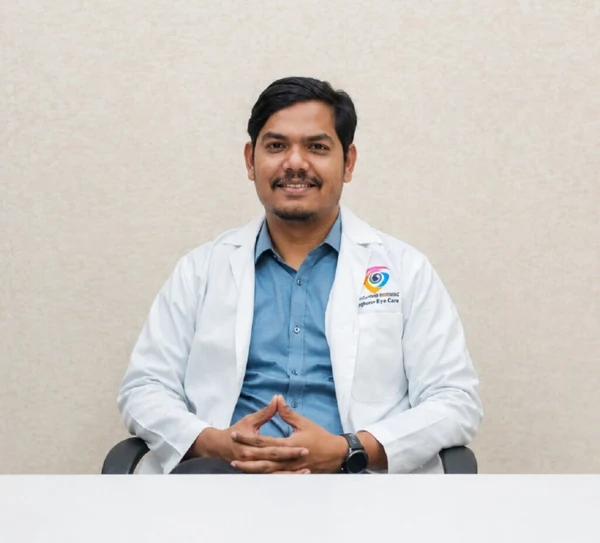
Attending Specialists